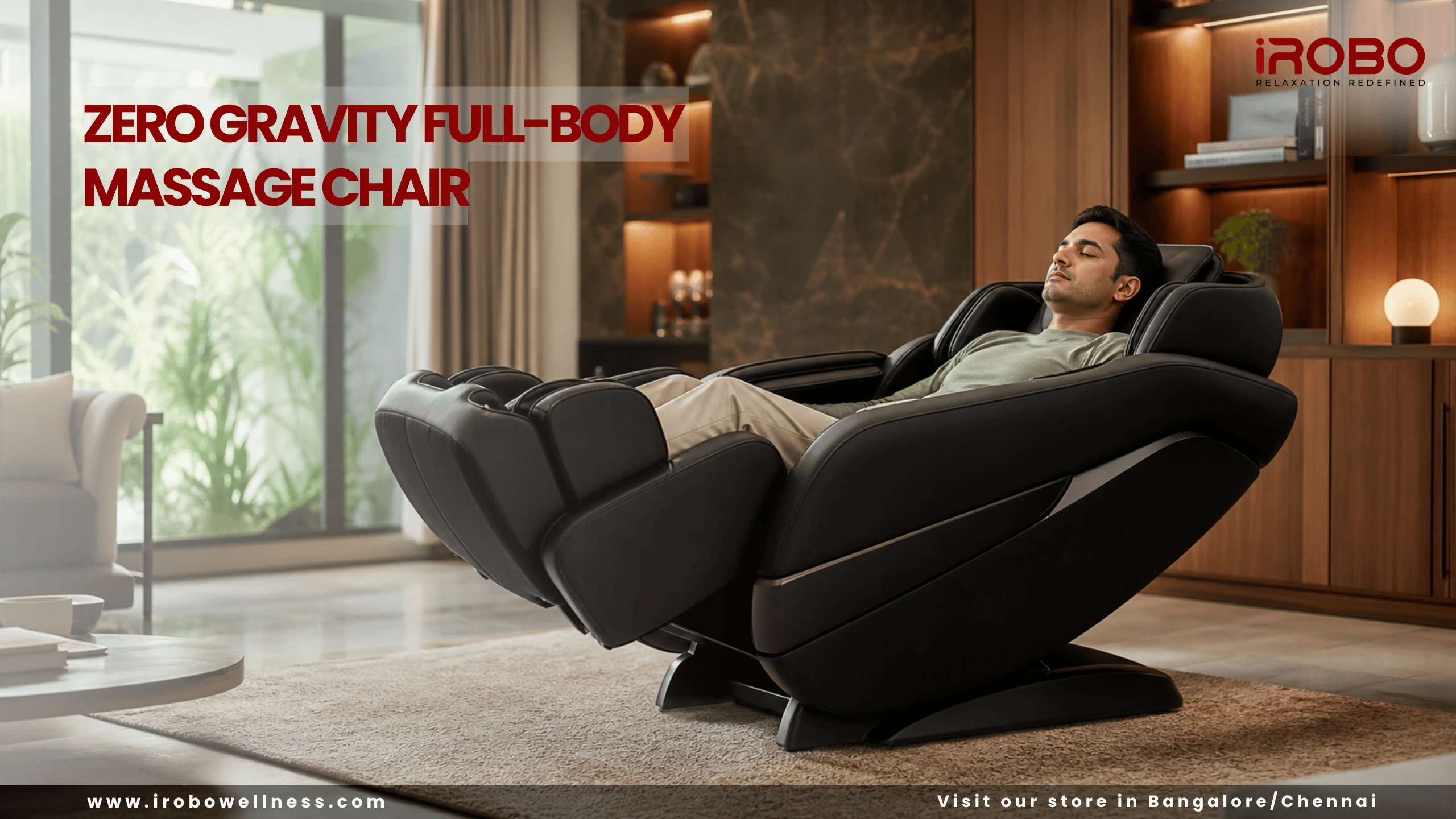
Quick answer: yes — for the most common kind of back pain, the muscular kind caused by sitting, stress and stiffness, a massage chair genuinely helps. It works by easing muscle tension, improving circulation and using zero-gravity recline to take load off the spine. It is not a treatment for structural problems like herniated discs, which need a doctor.
Most back pain in India right now isn't an injury. It's a desk.
Nine hours in a chair, an hour in traffic, then a sofa. Your lower back holds that position all day, the muscles around it tighten to compensate, and by evening you've got a dull ache that painkillers mute but never fix.
Here's what a massage chair actually does about that — honestly, including where it stops working and when you should be calling a doctor instead.
What's Actually Causing Your Back Pain?
This matters more than any chair spec, because the two broad categories respond completely differently.
Muscular and postural pain — the type a massage chair helps with:
- Long hours seated with poor posture
- Muscle tightness from stress and shallow breathing
- Stiffness from too little movement
- General fatigue and overuse from standing or lifting
Structural pain — where a chair may soothe but cannot solve:
- Herniated or slipped discs
- Spinal stenosis or degenerative disc disease
- Fractures, osteoporosis or recent spinal surgery
- Nerve compression causing numbness or weakness in the legs
How Does a Massage Chair Ease Back Pain?
Three mechanisms, working together: it releases the muscle tension holding your spine in a bad position, it improves blood flow to the tight areas, and it decompresses the spine by changing how your body weight is distributed.
It releases the muscles pulling on your spine
Tight muscles don't just hurt — they pull your spine out of neutral alignment, which then creates more pain. Kneading and rolling break that loop. This is also why relief from a single session fades but relief from a consistent routine tends to hold.
It gets blood moving through the stiff areas
Tense muscle restricts its own blood supply, which is why stiffness compounds through the day. Compression from airbags plus roller movement helps push circulation back through those areas, and lumbar heat amplifies the effect.
It takes the load off your spine
Zero-gravity recline positions your knees above your heart so your body weight spreads across the whole chair instead of compressing downward through your lumbar spine. This is why the same roller pressure feels considerably deeper in zero-gravity than sitting upright — your back isn't bracing against gravity while it happens.
Which Features Actually Matter for Back Pain?
Five. If a chair is missing any of these, it's the wrong chair for back pain — regardless of how impressive the rest of the spec sheet looks.
- A full-length SL track. Non-negotiable. A short track stops at your mid-back, which means it never physically reaches the lumbar region where most pain lives. Ask for the length in centimetres.
- Lumbar heat. Warm muscle releases faster and further than cold muscle. Heat before and during the massage makes everything else work better.
- Zero-gravity recline. The decompression effect described above. Chairs with multiple ZG angles let you find the position your back actually likes.
- Adjustable roller intensity. Back pain isn't a fixed thing — some days need gentle, some need deep. A chair locked to one intensity will be wrong half the time.
- Body scanning. Rollers mapped to an average spine will miss yours. Body scan reads your actual shoulder height and spinal curve so the pressure lands where it should.
Which iRobo Chairs Are Best for Back Pain?
All three below have a full SL track, lumbar heat, zero-gravity and body scanning. They differ in reach and how finely you can control the pressure.
iRobo iUltima — Longest Track, Best for Tall Users
₹4,00,000 (was ₹5,00,000)
A 137 cm S+L track — the longest in our range — running from neck to lower spine in one continuous flow. The AI "Chair Doctor" scans your body and adjusts intensity, pressure and warmth automatically, with heat adjustable from 40°C to 50°C. If you're tall and previous chairs have stopped short of where it hurts, this is the one.
See the iUltimaiRobo iDream Pro — Deepest Spinal Coverage
₹4,50,000 (was ₹5,80,000)
Dual rollers with eight heads covering the spine from C1 all the way to the sacrum, plus 48 full-body airbags across six intensity levels. Two zero-gravity angles (125° and 166°) let you find the decompression position that suits your back on a given day. The most thorough option if your pain spans both upper and lower back.
See the iDream ProiRobo iUltima Pro — Best Value for Daily Relief
₹3,25,000 (was ₹4,15,000)
SL curved track with 8 rollers, three zero-gravity modes and triple-level heating, so you can dial the warmth up on stiff mornings and down on easier days. Six saved user profiles means everyone in the house gets their own pressure settings. Our most recommended chair for people managing ongoing desk-job back pain.
See the iUltima ProWorking to a tighter budget? The iEco at ₹1,21,990 still gives you a full SL curved track, body scan, dual zero-gravity and back-and-leg heating — the four things that matter most here.
How Should You Use It for Back Pain?
Consistency beats intensity. Fifteen to twenty minutes daily on a moderate setting will do more for your back than an occasional forty-minute session on maximum.
- Start gentle for the first week — let your body adjust before increasing intensity
- 15 to 20 minutes per session, once or twice a day
- Turn the lumbar heat on from the start, not halfway through
- Use zero-gravity for lower back sessions — it's the whole point of the feature
- Stop immediately if anything sharpens rather than eases
- Keep moving during the day too. The chair complements movement, it doesn't replace it
Please speak to a doctor first if your pain radiates down your leg, comes with numbness, tingling or weakness, follows an injury or fall, doesn't improve after a few weeks, or wakes you at night. Also check with your doctor before using a massage chair if you're pregnant, have osteoporosis, a pacemaker, blood clots, or have had recent spinal surgery. A massage chair supports recovery — it doesn't diagnose or treat.
The Honest Verdict
For the everyday, muscular, sitting-too-long kind of back pain that most people have — a massage chair works, provided it has the reach and the heat to do the job. For anything structural, it's a comfort measure alongside proper medical care, not a substitute for it. Anyone who tells you otherwise is selling you something.
Feel It on Your Own Back — Book a Free Demo
Bring your actual back to our Experience Centres in Bangalore and Chennai and try the chairs that reach it. No pressure, no obligation.
📞 Call +91 80956 46566
Related reading:
1. Best Massage Chair in India 2026 — Prices & Expert Picks.
2. How to Choose the Right Massage Chair.
3. Better Results By Massage Chair For Muscle Recovery.
4. Can a Massage Chair Help You Sleep Better?
Buying locally? We deliver and install across Bangalore, Chennai, Hyderabad, Delhi, Mumbai, Pune and the rest of India.
Frequently Asked Questions
Do massage chairs really work for back pain?
For muscular and postural back pain — the kind caused by long hours sitting, stress and stiffness — yes. They ease muscle tension, improve circulation and use zero-gravity recline to reduce spinal load. For structural problems like herniated discs, a chair may soothe symptoms but cannot treat the cause.
Which massage chair is best for lower back pain?
Look for a full-length SL track with lumbar heat. The iUltima has the longest track in the range at 137 cm, and the iDream Pro covers the spine from C1 to the sacrum with dual rollers and eight heads. Both include adjustable heat for the lower back.
How does zero gravity recline help the spine?
Zero-gravity positions your knees above your heart so body weight distributes across the chair rather than compressing down through the lumbar spine. Because your back isn't bracing against gravity, the same roller pressure feels noticeably deeper and more effective than it does sitting upright.
How long should I use a massage chair for back pain?
15 to 20 minutes per session, once or twice a day. Consistency matters more than intensity — a moderate daily session does more than an occasional long one on maximum. Start gentle for the first week and let your body adjust before increasing pressure.
Can a massage chair help with sciatica?
Some people find relief when the discomfort comes from tight glutes and lower-back muscles, since airbag compression and lumbar heat can ease that tension. But sciatica involves nerve compression, so speak to a doctor before using a chair for it — particularly if you have numbness, tingling or weakness in the leg.
When should I see a doctor instead?
See a doctor if your pain radiates down a leg, comes with numbness, tingling or weakness, follows an injury or fall, doesn't improve after a few weeks, or wakes you at night. Also check first if you're pregnant, have osteoporosis, a pacemaker, blood clots or recent spinal surgery.
Can a massage chair make back pain worse?
It can if the intensity is too high too soon, or if the underlying problem is structural rather than muscular. Start on gentle settings, build up gradually, and stop immediately if anything sharpens rather than eases. Pain that worsens with use is a signal to get it properly assessed.