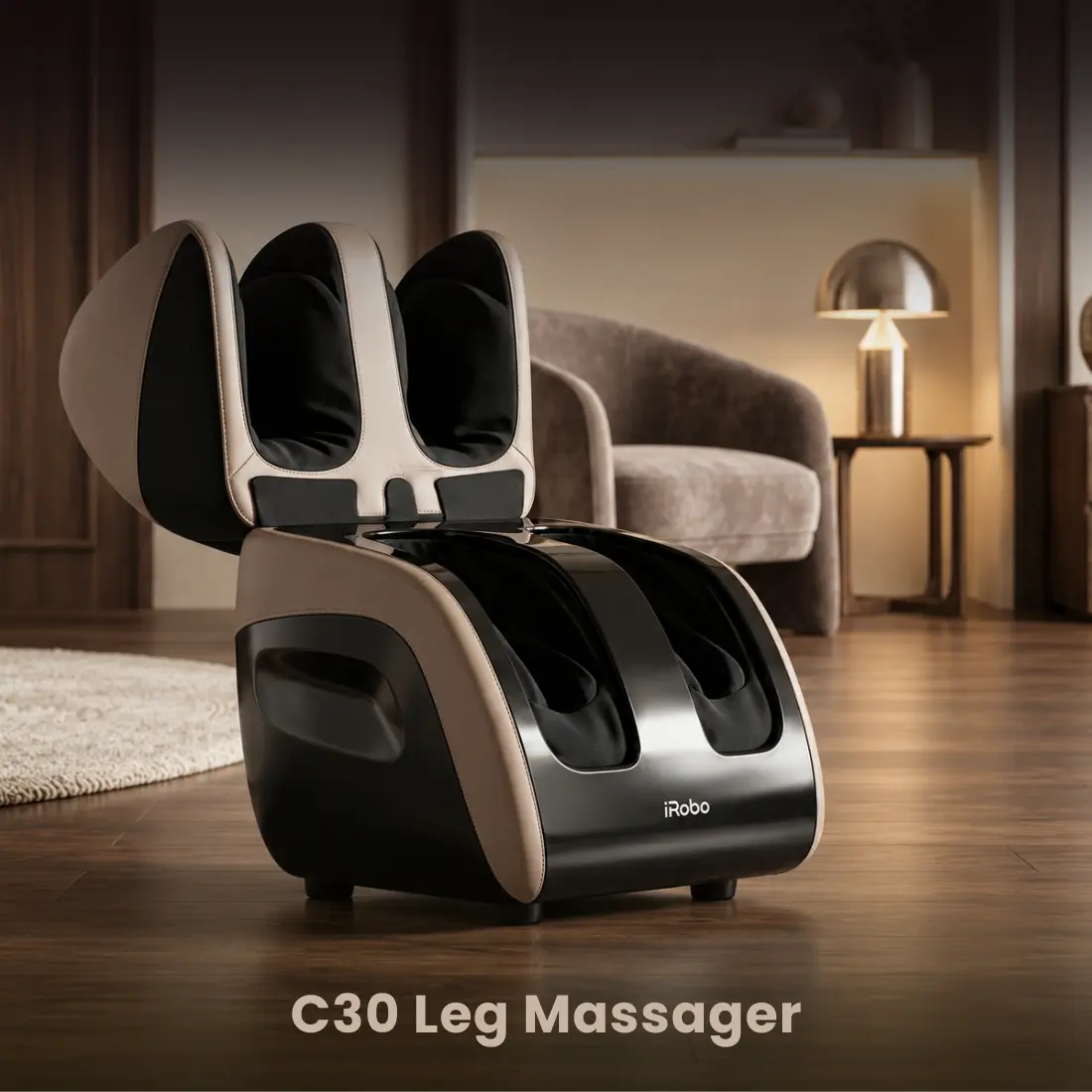
iRobo C30 Leg Massager Air compression, kneading, sole rollers and calf heat
If your legs feel heavy and tired by the end of the day, you're certainly in good company. Long hours standing at work, a commute on your feet, or a weekend of walking can all leave your calves and feet begging for a break. That's why many people look for a leg massager to bring a bit of that relief home.
However, leg massagers vary a lot. A few only work on the feet, while others squeeze with air. Some knead, a handful add heat, and the more advanced ones do all of it. So this guide covers what a leg massager actually does, what it can and can't help with, how to choose one for home use, and who should check with a doctor first.
The Short Answer
A leg massager (also called a leg massage machine or foot and calf massager) is an electric device that massages your feet and calves while you sit, using air compression, kneading, rollers, heat, or a mix. In other words, it's a comfort and relaxation tool for the end of a long day, not a medical treatment.
When buying one, focus on the massage methods you enjoy, the areas it actually covers, how much intensity control you get, and the warranty behind it. Also, if you have a medical condition or unexplained leg pain or swelling, talk to a doctor before using one.
What Is a Leg Massager?
A leg massager is an electric device that massages your feet, calves and, in some designs, the area around the knees, while you sit and relax. You simply place your lower legs inside it, and then it runs a massage programme on its own.
Most leg massage machines use one or more of these four mechanisms:
Air Compression
Air bags inflate and deflate, gently squeezing and then releasing your legs. As a result, it feels like a firm, rhythmic hug.
Kneading
Moving parts or air bags press and then release in a pattern. In fact, it's designed to imitate the hand action of a massage.
Foot Rollers
Rotating rollers under the soles press into the bottom of your feet, especially around the arch.
Heat
Warmth is applied to an area, such as the calves, while the massage runs.
Not every leg massager has all four, though. Therefore, check which ones a model actually includes, rather than going by the box photo.
What Are the Benefits of Using a Leg Massager?
A leg massager offers what massage in general offers: comfort, relaxation and some short-term relief from muscle tension.
According to the Mayo Clinic, research suggests massage therapy may help reduce stress, ease pain and muscle stiffness, and support relaxation. That said, Mayo Clinic also notes that benefits vary by condition and more research is needed. Besides, that research is mostly about massage from trained therapists, not specific machines.
So here's a fair way to think about it:
- It can be a nice, low-effort part of your evening wind-down
- Kneading, squeezing and rollers can feel soothing, especially on tired muscles
- Heat, where included, also adds a warm, relaxing feel for many people
- You don't need to book an appointment or ask someone at home to rub your feet
On the other hand, it isn't a replacement for medical care, physiotherapy or a diagnosis. If you're weighing those options, our guide on when a massage device isn't enough explains the difference.
Can a Leg Massager Help With Tired Legs After Standing or Walking?
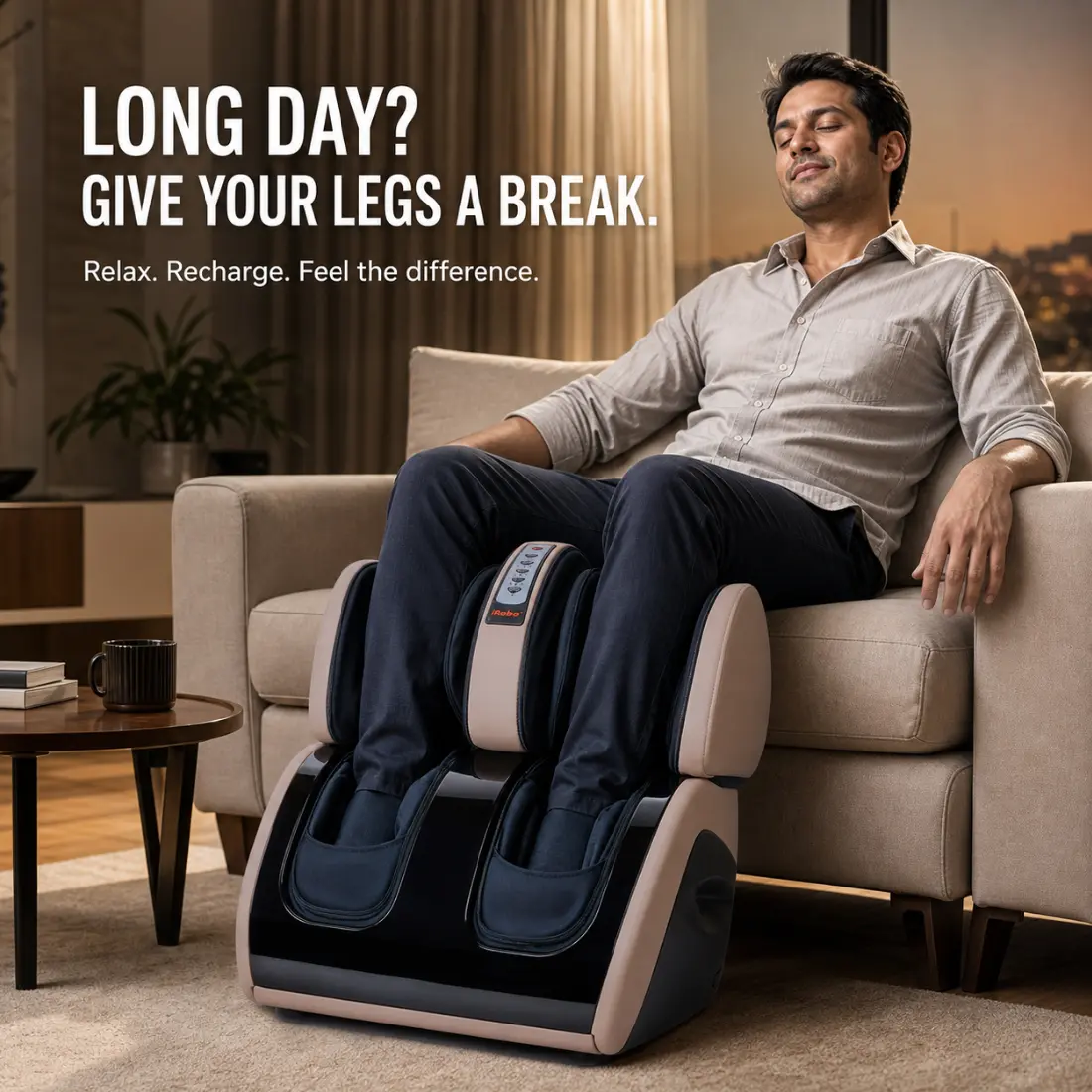
For many people, yes, as a way to relax after a long day. For example, teachers, retail staff, nurses, chefs and anyone who spends hours on their feet often look for exactly this.
However, the key word here is relax. A session may leave your legs feeling lighter for a while, although it won't fix whatever is causing the tiredness. So if your legs feel heavy every day, are painful, or the feeling is getting worse, talk to a doctor. We've also written about leg care for people who stand all day.
Can a Leg Massager Relieve Calf or Foot Muscle Tightness?
It may help ease everyday tightness. In particular, Mayo Clinic lists easing muscle stiffness and tension among the possible benefits of massage, and kneading on the calves and rollers on the soles target exactly those areas.
Still, tightness from a long walk is different from pain caused by an injury, a strain or a medical condition. Also, a leg massager isn't designed to treat injuries. Therefore, if pain is sharp, follows an injury, or doesn't settle within a few days, get it checked.
Can a Leg Massager Reduce Swelling?
You shouldn't buy one expecting it to. After all, swollen ankles, feet or legs have many possible causes, and some of them need medical attention.
According to the NHS, leg swelling (oedema) is often caused by standing or sitting in one position too long, too much salt, being overweight, pregnancy or certain medicines. In addition, it can come from an injury, an infection, a blood clot, or problems with the heart, kidneys or liver.
That's why massage isn't a safe first response to unexplained swelling. Instead, see a doctor promptly if:
- Only one leg, ankle or foot is swollen and you don't know why
- Swelling is severe, painful or came on suddenly
- The area is red or feels hot
- You have diabetes and your feet, ankles or legs are swollen
Compression Leg Massager vs Regular Leg Massager
A compression leg massager works mainly with air bags that inflate and deflate around your feet and calves. In contrast, a "regular" leg massager may use vibration, rotating nodes, kneading parts or rollers instead.
| Type | How It Works | Feels Like | Good To Know |
|---|---|---|---|
| Air compression | Air bags inflate and deflate in sequence | Broad squeeze-and-release | Covers a wide area at once |
| Kneading | Parts press and release in a pattern | Hand-like kneading | Often combined with compression |
| Rollers | Rotating rollers under the soles | Firm foot rub | Only works where the rollers are |
| Vibration | Surface vibrates | Buzzing, lighter | Usually found in budget models |
In fact, many home units combine several methods. So rather than choosing between "compression" and "regular," read the actual feature list and pick the mix that suits the kind of massage you enjoy.
Foot Massager vs Leg Massager: What's the Difference?
The difference is coverage. A foot massager focuses on the soles and sometimes the ankles. Meanwhile, a leg massager is built to reach further up, usually the calves, and in some designs the knee area or beyond.
The catch, however, is that product names here are used loosely. For instance, a "foot and calf massager" and a "full leg massager" might cover very different areas. Therefore, before buying any model, check exactly where the massage reaches, and ask the seller if the description and photos don't match.
How to Choose the Best Leg Massager for Home Use
There's no single best leg massager for everyone, because the right one depends on your legs, your comfort preferences and your budget. With that in mind, here's what actually matters.
Massage Methods, Intensity and Programmes
Massage mechanisms: If you prefer a squeeze, then look for air compression. If you love foot rubs, make sure there are sole rollers. Likewise, if you want warmth, confirm heat is included and find out where and when it works.
Pressure intensity: Several intensity levels let you start gently and go firmer only if it feels right.
Programme modes: Preset programmes change the pattern and sequence of the massage. Even so, more programmes only help if you'll actually use them.
Heat, Fit and Ease of Use
Heat function: Check where the heat applies and whether it has conditions for switching on. Also, don't assume a temperature or adjustable heat setting unless the manufacturer states it.
Fit and coverage: This one is especially easy to overlook. Confirm which areas it covers and whether it fits your leg length and calf size, since "one size" doesn't always mean "fits everyone."
Ease of use: Can you work the controls without the manual? And is it easy to get your legs in and out? That matters especially for elderly family members.
Cleaning, Warranty and Price
Cleaning and maintenance: Find out whether the covers are removable or washable, as well as how the unit should be cleaned.
Warranty and after-sales support: Check what's covered, for how long, and whether service is available in your city. Above all, get it in writing.
Price and value: Generally, cheaper units offer fewer massage methods or less coverage. Pricier ones, on the other hand, should justify the gap with features you'll use and solid support.
Where the iRobo C30 Leg Massager Fits In
iRobo Wellness sells one leg massager, the iRobo C30. Here's how its features connect to the checklist above:
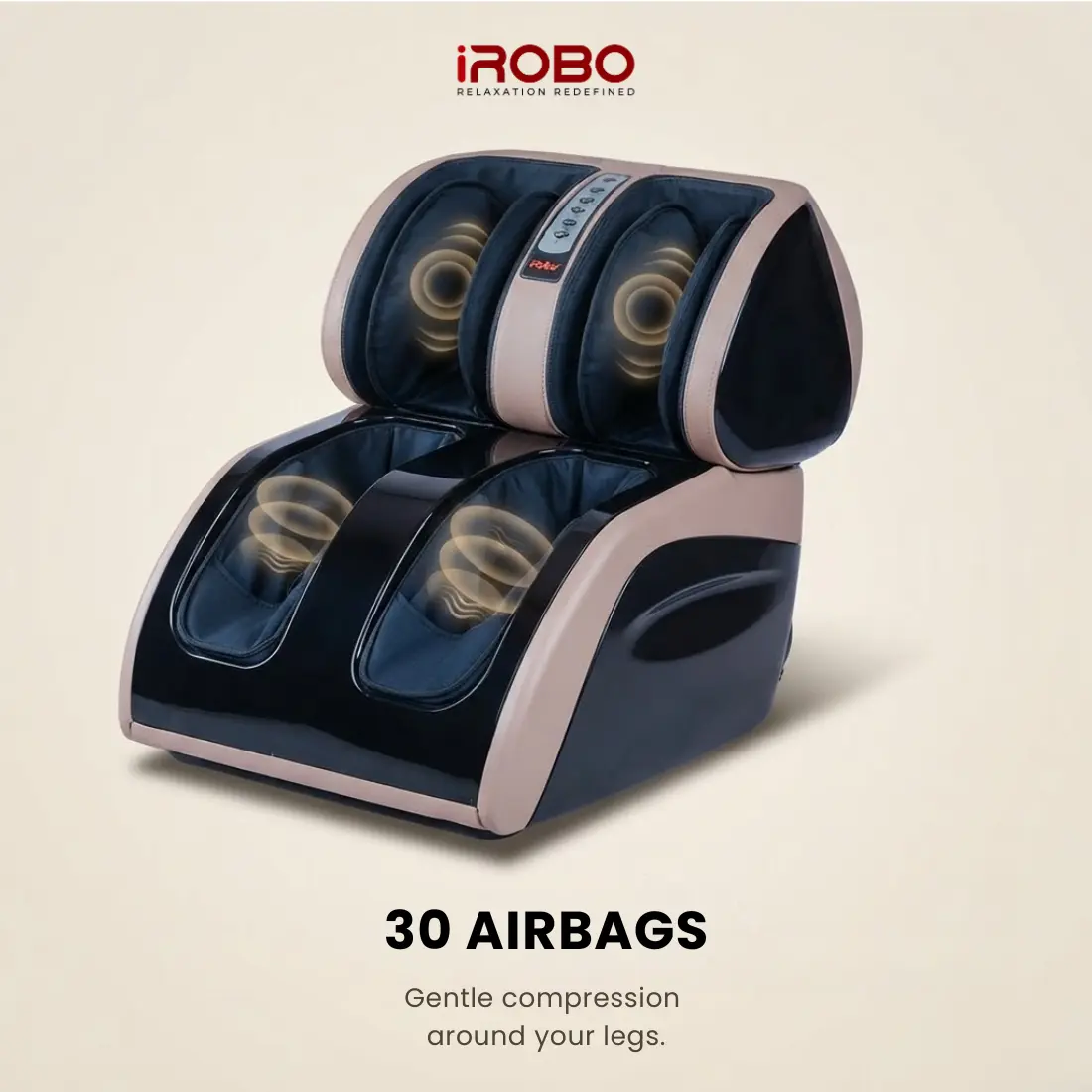
- 30 built-in air bags: air compression across the legs
- Kneading: combined with compression for a hand-like feel
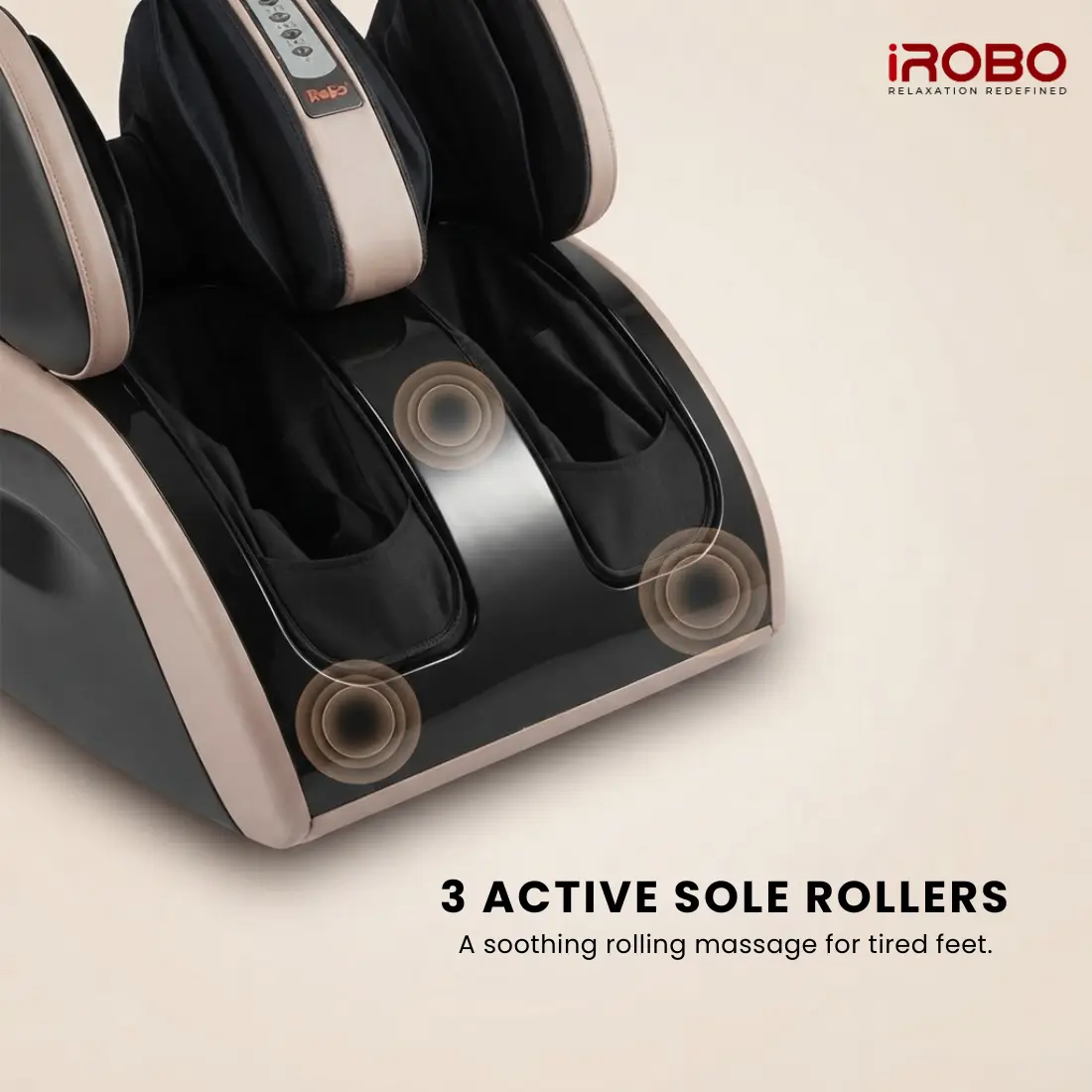
- Three active sole rollers: work on the bottoms of your feet
- Five programme modes: change the pattern and sequence of the massage
- Pressure levels (low, medium, high): change how firm it feels
- Calf heat: switches on when the upper section is tilted beyond 110° and the bottom bracket beyond 20°
- Adjustable tilt: changes how the unit sits against your legs
Programmes vs pressure levels: first, pick one of the five programmes for the style of massage. Then choose low, medium or high for the strength.
Price: ₹36,000 (MRP ₹42,000) with free shipping, as listed on the official website in October 2026. Prices can change, though, so check the product page for the current price.
Before you buy: if you need massage on a specific area, such as above the knee, confirm the coverage with iRobo Wellness first. Similarly, if heat matters to you, ask for a quick demo of the tilt position that activates it.
Who Should Take Extra Care Before Using a Leg Massager?
Generally, most healthy adults can use a leg massager for relaxation. Even so, it's a consumer wellness device, not a medical treatment. For example, Mayo Clinic advises talking to your healthcare team before massage if you have a bleeding disorder, take blood-thinning medicine, recently had a blood clot in your leg, recently had a heart attack, or have burns, broken bones or severe osteoporosis.
Conditions to Discuss With Your Doctor First
Speak to a doctor before using one if any of these apply to you:
- A past or suspected blood clot (DVT). The NHS lists throbbing pain and swelling in one leg, usually in the calf or thigh, as well as darkened skin and swollen veins, as possible DVT symptoms. These need urgent medical help, not massage.
- Diabetes, nerve damage or reduced feeling in your feet. Because sensation is reduced, it can be harder to notice if heat or pressure is too much.
- Varicose veins. The NHS notes they can sometimes lead to complications, including blood clots.
- Pregnancy
- Open wounds, skin infections, recent surgery or a recent injury on your legs
- Unexplained leg pain or swelling
Finally, one rule applies to everyone: a massage should never hurt. So if anything feels painful, numb or uncomfortable, stop straight away.
The Bottom Line
A good leg massager can be a comfortable, easy way to unwind after long days on your feet. To sum up, choose based on four things: the massage methods you enjoy, the areas it actually covers, the control it gives you over intensity, and the support behind it.
If you want air compression, kneading, sole rollers and calf heat in one device, the iRobo C30 is worth a look. And as always, if you have a medical condition or unexplained symptoms, speak to a doctor first.
Ready to Give Your Legs a Break?
Explore the iRobo C30 online, or contact us to ask about coverage, fit or a demo near you.
Frequently Asked Questions
Do leg massagers actually work?
Yes, for what they're designed to do: provide massage and help you relax. In fact, research on massage in general suggests it may ease stress, muscle stiffness and tension. However, a leg massager doesn't diagnose or treat medical conditions, so if you're buying one to fix a health problem, speak to a doctor first.
Is a leg massager safe for people with varicose veins?
Unfortunately, there's no blanket answer, because it depends on your own health. Varicose veins are often harmless, although the NHS notes they can sometimes lead to complications such as blood clots. Because compression and heat both act on the legs, ask your doctor before using a leg massager if you have varicose veins, especially painful, swollen or bleeding ones.
Can I use a leg massager every day?
Generally, it depends on the device and on you. First, follow the usage guidance in your model's manual. Also, check with your doctor if you have a health condition. If your legs feel sore, bruised or numb after a session, give them a break and seek advice.
How long should I use a leg massager in one session?
Ideally, use the session length recommended in your device's manual. Many leg massagers run programmes with a built-in timer, so check what yours does. Also, avoid restarting sessions back to back if your legs feel tender. For the iRobo C30, ask iRobo Wellness for the recommended session length.
Can I sleep while using a leg massager?
It's best not to, because you lose control of the session. While you're asleep, you can't adjust the pressure, stop a programme or notice if heat feels too strong. This matters especially for people with reduced sensation in their feet. Instead, use it while you're awake and relaxed, then switch it off before you nod off.
Are leg massagers suitable for elderly people?
They can be, although older adults are more likely to have conditions that need a doctor's input first, such as diabetes, circulation problems, a history of blood clots or blood-thinning medicines. Start at the lowest intensity, make sure they can get their legs in and out easily, and stay nearby for the first few sessions.
How do I choose the correct size?
Check the fit details before you buy. Many leg massagers, including the iRobo C30, come in one size, and an adjustable tilt helps with positioning. However, that doesn't guarantee it fits every leg. So if you're tall, short or have larger calves, ask the seller for fit guidance or try a demo.
Which leg massager is best for home use?
The best one is the one that matches your needs. First, decide which massage methods you want, such as air compression, kneading, rollers or heat. Next, consider the areas you need covered, how much intensity control you want and your budget. Finally, check warranty and service in your city.
What is the price of a leg massager in India?
Prices vary widely, especially by features. Basic foot-only or vibration models cost much less, whereas units combining air compression, kneading, rollers and heat sit at the higher end. For example, the iRobo C30 is listed at ₹36,000 (MRP ₹42,000) on the official website as of October 2026. Also, always confirm the current price on the seller's site.
What warranty and after-sales service does iRobo Wellness provide?
Please confirm the current warranty and service terms directly with iRobo Wellness before you buy. In particular, ask what's covered, for how long, and how service works in your city. You can reach the team through the Contact Us page.
This article is for general information only and therefore isn't medical advice. Speak to a qualified healthcare professional about your own health.