Zero gravity is on almost every massage chair spec sheet in India, usually described as "NASA-inspired" and left at that. Which tells you where the idea came from, but nothing about what it does to your back, why it exists on a full-body massage chair at all, or whether it's worth paying for.
Here's the plain version: zero gravity is a reclining position, not a massage feature. But it changes how every massage program in the chair feels — and that second part is the bit most buyers never hear about.
The Short Answer
Zero gravity is a recline position where your knees sit at or slightly above heart level and your torso tilts back to roughly 120–135 degrees. It spreads your body weight across the entire backrest instead of concentrating it on your lower spine and hips.
It does two things. It reduces compressive load on the lower back, and it presses your back more firmly into the rollers — so the same massage program feels noticeably deeper in zero gravity than sitting upright. It's the rare feature that's both a comfort upgrade and a massage upgrade.
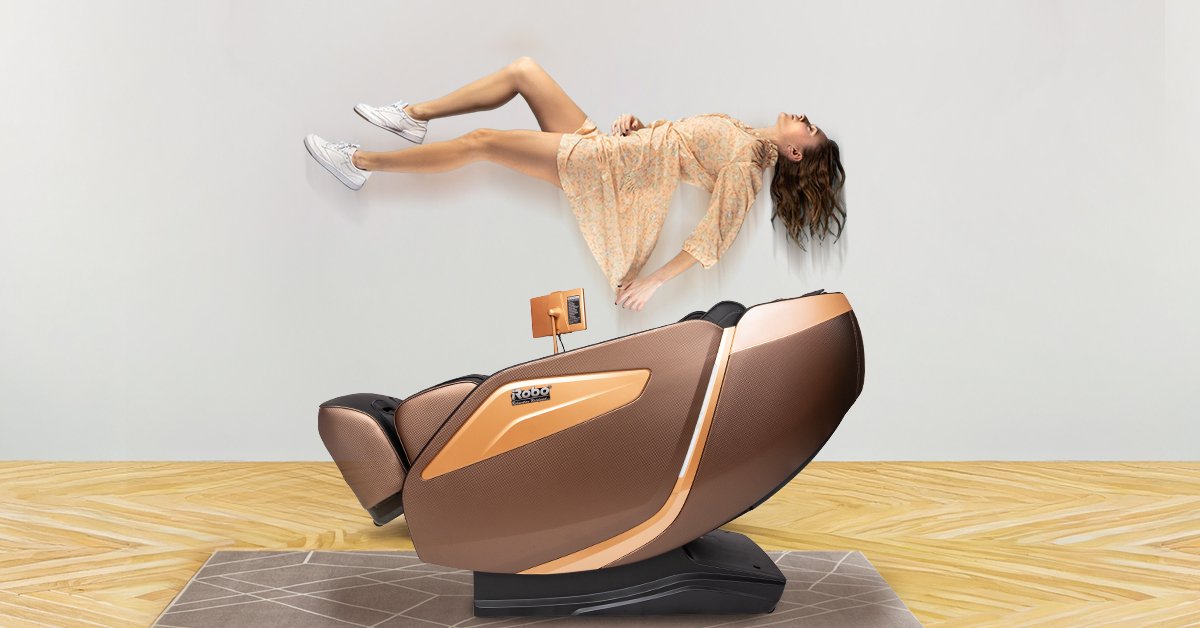
Where the "Zero Gravity" Name Actually Comes From
NASA researchers documented what they called the neutral body posture — the position the human body naturally settles into in microgravity, when no muscle effort is needed to hold any joint in place. Knees bend slightly, hips open, arms float forward, the spine relaxes into a gentle curve.
A zero gravity chair approximates that posture on Earth, using the seat and legrest to support your weight so your muscles don't have to. You aren't weightless — gravity hasn't gone anywhere. What changes is that your body stops working to hold itself up.
You'll often see this described as "the position astronauts take during launch." That's marketing shorthand rather than the technical origin, and it's worth knowing the difference, because the neutral body posture explanation is the one that actually tells you why the chair is shaped the way it is.
What Happens to Your Body in Zero Gravity
Weight redistributes
Sitting upright concentrates load on your lower spine and sit bones. Reclined with legs elevated, that load spreads across the full length of the backrest — so no single area carries it.
The lower back unloads
Less compressive force on the lumbar region is the whole point. For most people this is felt as an immediate easing rather than anything dramatic.
Muscles stop bracing
Supported at every joint, the postural muscles that quietly hold you upright all day can switch off. That's what produces the "sinking" sensation people describe.
The Part Nobody Explains: It Makes the Massage Deeper
This is the genuinely useful thing about zero gravity, and it's almost never mentioned in product descriptions.
When you sit upright in a massage chair, gravity is pulling you down and slightly away from the backrest. Your back rests against the rollers, but not into them. Recline into zero gravity and your body weight now presses back against the roller mechanism. Same program, same intensity setting — more contact pressure.
Which means zero gravity is effectively a free intensity upgrade. People who find a chair too gentle upright are often surprised by how much firmer the identical program feels reclined. It's also why testing a chair while sitting upright in a showroom tells you very little about what it can do.
Practical tip for your demo: run the same program upright, then in zero gravity, then in the deepest zero gravity stage. If the salesperson only shows you one position, you haven't seen what the chair does.
Recline Positions Compared
| Position | Typical angle | What it does | How the massage feels |
|---|---|---|---|
| Upright | Around 90° | Full load on lower spine and hips | Lightest — back rests against rollers, not into them |
| Standard recline | 110–120° | Some load transferred to the backrest; legs stay low | Moderate — noticeably firmer than upright |
| Zero gravity, stage 1 | 120–128° | Knees reach heart level; weight spreads along the backrest | Deeper contact, especially through the mid and lower back |
| Zero gravity, stage 2 | 128–135° | Knees clearly above heart; maximum unloading of the lumbar area | Deepest — the setting most people end up using |
| Full flat | Close to 180° | Legs no longer elevated relative to the heart | Comfortable for resting; loses the zero-gravity effect |
Angles vary between manufacturers — there's no industry standard for what counts as "zero gravity." Treat these as typical ranges, and judge by how the position feels at your height rather than by the number on the box.
What Zero Gravity Does — and What It Doesn't
Reasonable to expect
- Reduced pressure on the lower back while you're in the position
- A noticeably deeper massage at the same intensity setting
- Postural muscles relaxing, since nothing needs holding up
- A more comfortable position for longer sessions
- Legs elevated above the heart, which many people find relieving after a day on their feet
Claims to treat carefully
- Guaranteed improvements in cardiovascular health
- Measurable changes to cortisol or hormone levels
- Treating or curing back conditions
- Permanent spinal decompression — the effect lasts while you're in the position
- Better sleep as a certainty rather than something some people report
None of the second list is impossible. The issue is that they're routinely stated as guaranteed outcomes when the honest version is "many users find" or "may help." A brand willing to tell you what a feature doesn't do is usually more reliable on what it does.
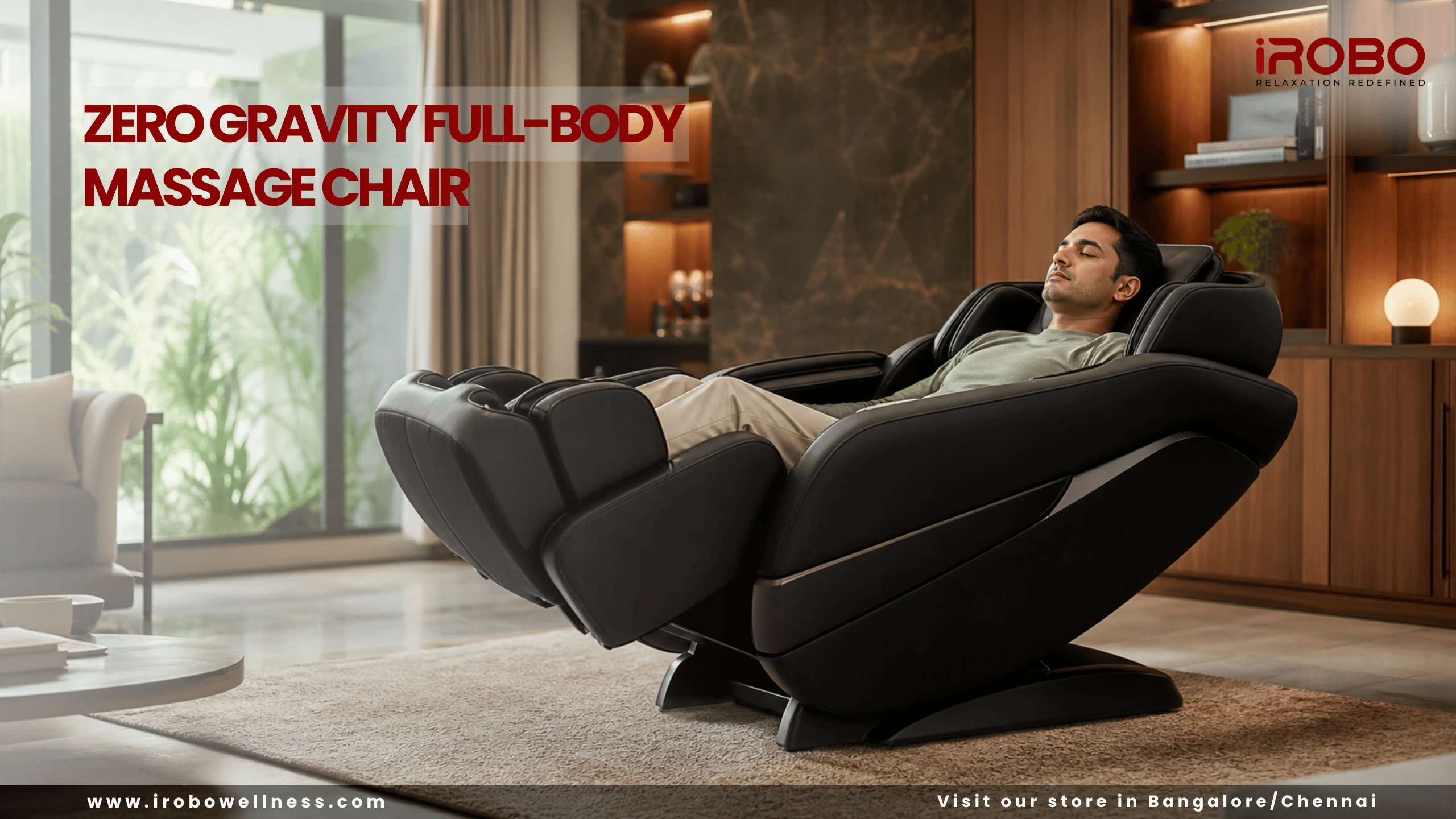
Knees at or above heart level is the defining feature. If the legrest doesn't get that high, it isn't a true zero-gravity position.
Who Benefits Most From Zero Gravity
People who sit all day
Eight or nine hours seated keeps the lumbar spine under continuous compression, and a commute extends it. Zero gravity reverses that loading pattern directly, which is why it tends to be the position desk workers stay in.
People who stand all day
Retail staff, teachers, nurses, anyone on their feet. Elevating the legs above heart level is a long-standing comfort practice for tired, heavy-feeling legs — the chair simply does it for you, with a calf massage attached.
Anyone using the chair for longer sessions
A 10-minute program is fine upright. A 30-minute one usually isn't. Zero gravity is what makes longer sessions comfortable enough to actually finish.
People who find chairs too gentle
Before paying more for a higher-intensity model, try the chair you're considering in its deepest zero-gravity stage. The extra contact pressure often closes the gap.
Taller and heavier users
Weight distribution matters more, not less, at the extremes. But check that the legrest extends far enough — if your heels hang off the end, the position won't set up correctly no matter what the chair claims.
How Many Zero Gravity Stages Do You Need?
Chairs offer anywhere from one fixed position to three or more. More stages isn't automatically better, but one is genuinely limiting, because the ideal angle varies by height, weight and what feels comfortable to you.
Two stages covers most people well: one moderate, one deep. Three gives finer control and is worth having if several people share the chair. What matters more than the count is whether at least one of the stages feels right for your body — which you can only find out by trying it.
Also check how the chair transitions. Some move into position smoothly; others lurch, which is unpleasant when you're already relaxed. And note whether the chair needs wall clearance to recline, or uses space-saving recline that slides forward instead — in most Indian apartments, that's the difference between the chair fitting the room and not.
Zero Gravity Combined With Other Features
Zero gravity works best as part of a combination, not on its own:
- With an SL-track — reclined, the extended roller path can reach the glutes and hamstrings properly, which is harder to achieve seated upright.
- With 3D or 4D rollers — since the position already increases contact pressure, adjustable depth lets you dial intensity back down if it becomes too much. Our guide to 4D roller technology covers how that adjustment works.
- With lumbar heat — the lower back is already unloaded, so warmth applied there tends to be where people notice it most.
- With calf and foot airbags — legs are elevated anyway; compression while raised is the combination people use after long days standing.
- With body scanning — the scan sets roller position for your frame before you recline, so the deeper contact lands in the right places.
The pattern worth noticing: zero gravity doesn't add a new sensation. It amplifies everything else the chair already does. Which is exactly why it's worth having — and why it can't compensate for a weak massage system underneath.
What to Check When You Try Zero Gravity
- Do your knees actually clear your heart? Look at the geometry once you're in it. Some chairs advertise zero gravity but don't lift the legs high enough.
- How many stages, and do any of them fit you? Try each one. At your height, one will feel obviously better than the others.
- Does the massage feel different reclined? Run the same program upright and reclined. If there's no difference, the position isn't doing its job.
- Is the transition smooth? A jerky recline motor is a build-quality signal.
- Does the legrest reach your feet? Heels hanging off the end means the position never sets up properly.
- Is getting out of it easy? Especially important for older users. Test the return-to-upright button and time it.
- How much wall clearance does it need? Measure at home first, then ask for the reclined footprint.
- Can you reach the remote while reclined? Sounds trivial. Isn't, when you're 20 minutes into a session.
Zero Gravity Across the iRobo Range
Zero-gravity recline appears across our range of massage chairs, with the number of stages and the depth of recline varying by model — from single-position recline on the accessible chairs to multi-stage positioning on the flagships. The current line spans ₹79,990 to ₹4,50,000.
- iEco FR & iEco — the accessible entry point into a true massage chair
- iNap Pro & iElegant — compact, straightforward daily relief
- iRoyal Pro & iUnique — advanced therapy in a smaller footprint
- iDream Pro & iUltima — the full premium feature set
Our honest advice: don't choose a chair for its zero gravity alone. Nearly every chair above a certain price has it, so it rarely separates two models. Decide on the massage system first — track length, roller depth, body scanning — then treat the quality of the zero-gravity implementation as a tie-breaker.
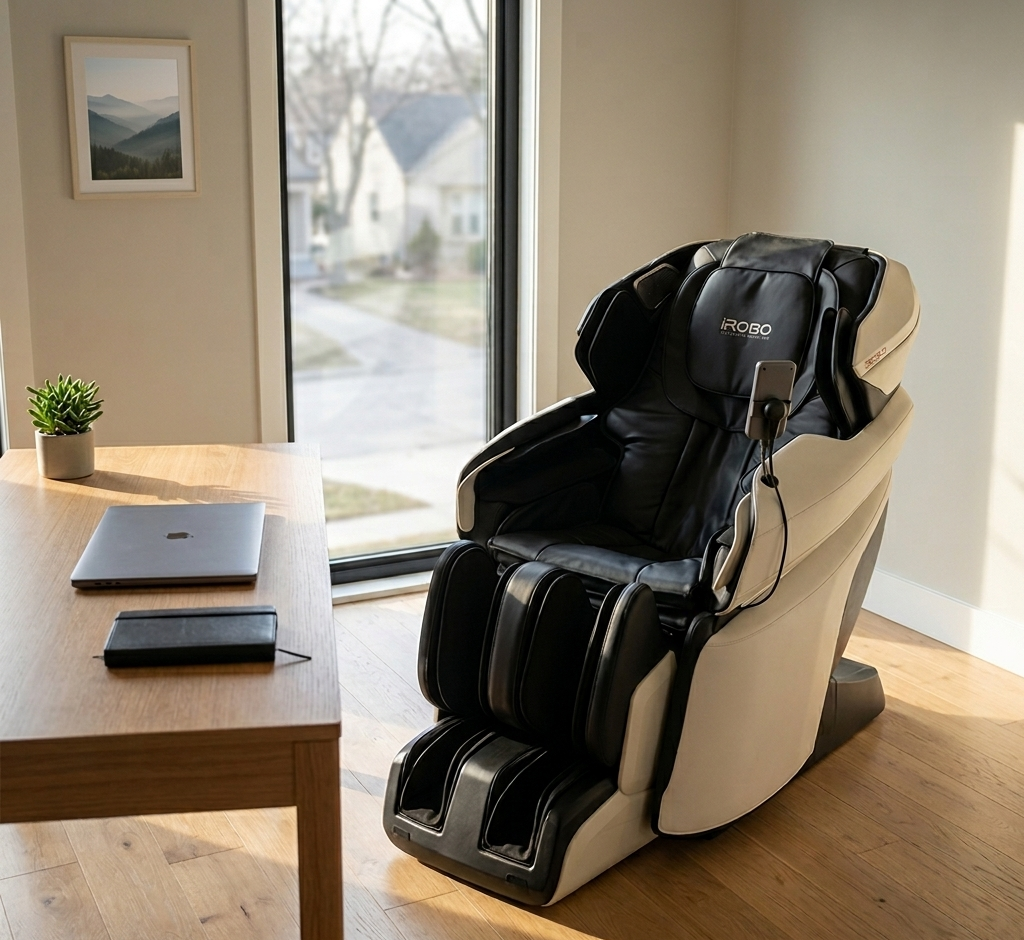
iUltima Pro Full-Body Massage Chair
Three separate zero-gravity stages rather than one fixed angle — which matters, because the position that suits a 5'3" frame isn't the one that suits a 6' frame. Paired with an SL track and 4D rollers, so the extra contact pressure you get from reclining lands somewhere useful.
- 3 zero gravity modes for different heights and builds
- SL curved track with 8 rollers, head to glutes
- 3D + 4D system with adjustable depth and rhythm
- Full-body airbags with triple-level heating
- 6 user memory profiles for shared households
- Foot rollers, voice control, Bluetooth, USB-C
Feel the Difference for Yourself
Zero gravity is difficult to describe and obvious the moment you're in it. Free demos at our Bangalore experience centres, no obligation.
Or call us on +91 80956 46566.
Final Verdict
Zero gravity is one of the few massage chair features where the marketing and the mechanics broadly line up. Elevating your knees above your heart genuinely redistributes load away from your lower spine, and it genuinely deepens the massage by pressing you into the rollers. Both effects are real and both are immediately noticeable.
What it isn't is a treatment. The benefits last while you're in the position, and the claims that stretch into cardiovascular health or hormone levels are doing more work than the evidence supports.
Buy a chair for its massage system. Expect zero gravity to make that system feel better than it does upright — because it will. Just don't expect the position alone to rescue a chair whose rollers, track and scanning aren't up to much.
A note on health: massage chairs are wellness products designed to support relaxation and may provide temporary relief from everyday muscle tension. They aren't medical devices and don't treat or cure medical conditions. Zero-gravity positioning may not be suitable for everyone — if you're pregnant, recovering from injury or surgery, or managing a spinal condition, osteoporosis, glaucoma, high or low blood pressure, or a heart condition, check with your doctor before using a reclining massage chair regularly.
Frequently Asked Questions
What is a zero gravity massage chair?
A massage chair that reclines into a position where your knees sit at or above heart level and your torso tilts back to roughly 120–135 degrees. It spreads your body weight across the whole backrest instead of concentrating it on the lower spine, and presses your back into the rollers so the massage feels deeper.
Is zero gravity really based on NASA research?
Broadly yes. NASA documented the neutral body posture — the position the body naturally settles into in microgravity, with no muscle effort holding any joint. Zero-gravity chairs approximate that posture on Earth. The common "astronaut launch position" description is marketing shorthand rather than the technical origin.
Does zero gravity actually help with back pain?
It reduces compressive load on the lower spine while you're in the position, which many people find eases everyday stiffness and tension. It isn't a medical treatment, and the effect lasts while you're reclined rather than permanently. For diagnosed back conditions, speak to a doctor first.
What angle is the zero gravity position?
Typically 120–135 degrees, depending on the chair and the stage selected. There's no industry standard, so manufacturers define it differently. The reliable test isn't the number — it's whether your knees end up at or above heart level.
Does zero gravity make the massage feel stronger?
Yes, and this is the most useful and least discussed benefit. Reclined, your body weight presses back against the rollers instead of resting lightly on them, so the same program at the same setting delivers noticeably more contact pressure than it does upright.
How many zero gravity positions should a massage chair have?
Two covers most people — one moderate, one deep. Three gives finer control and helps when several people share the chair. A single fixed position is limiting, since the ideal angle varies by height and build. What matters most is whether one of the available stages suits your body.
Can I sleep in a zero gravity massage chair?
Many people doze off during a session, and the position is comfortable enough for that. It's designed for sessions rather than full nights, though — most chairs auto-stop after a set time, and a bed remains the better option for sleeping.
Is zero gravity safe for seniors?
Generally yes, with two things to check: that getting in and out is easy and unassisted, and that the massage intensity has a gentle enough lower range. Anyone managing a heart condition, blood pressure issues, osteoporosis or a spinal condition should check with their doctor first.
Is zero gravity the same as a normal recliner position?
No. A standard recline tilts the backrest but leaves your legs relatively low. Zero gravity elevates the knees to or above heart level, which is what redistributes the load away from the lower spine. The leg elevation is the defining difference, not the backrest angle.
Do all massage chairs have zero gravity?
Most chairs above the entry level include some form of it, but implementations vary widely — some elevate the legs properly, others recline without reaching true knee-above-heart positioning. Since it's so common, zero gravity rarely separates two chairs on its own. Judge the massage system first.